CHRONOLOGY
Salvador Dalí, Gala, and Horst P. Horst maintained a personal and professional relationship over several decades. This chronology sets out the most significant collaborations, meetings and documents of which we have knowledge to date.
1939
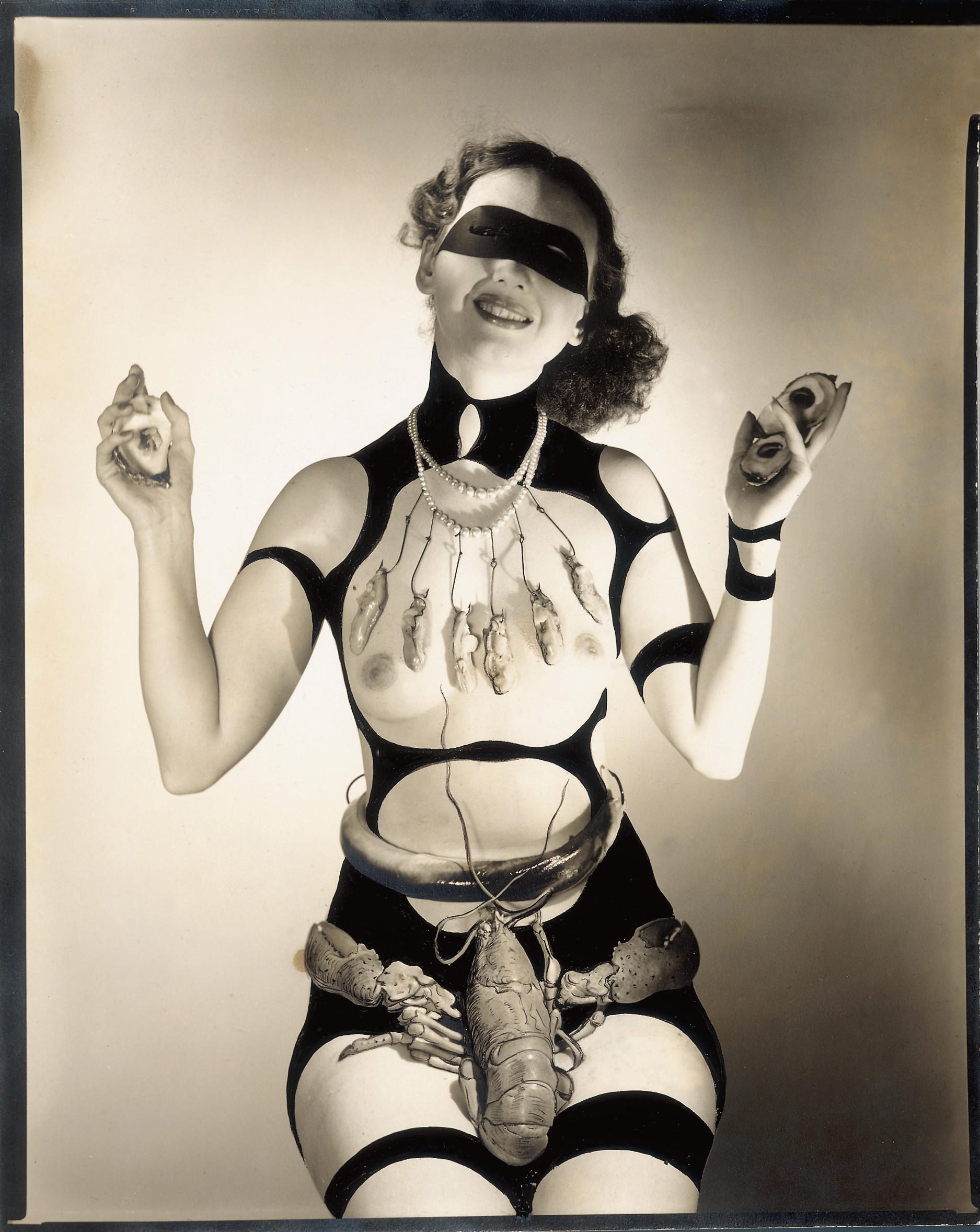
In April, the first documented collaboration between the photographer Horst P. Horst and Salvador Dalí takes place. The artist works on the Surrealist Dream of Venus pavilion for the New York World’s Fair, while Horst is one of the group of photographers responsible for carrying out the sessions with nude models, in which the artist also participates, accompanied by Gala. Dalí intervenes in two of Horst’s photographs from these sessions, and creates the costume designs of the mermaids that will be part of the installation. In an initial phase of the project, the two images are incorporated in large format into the façade of the pavilion.
In September, an article in Vogue headed ‘Paris Openings. Variety Show’ includes a photograph by Horst. This picture features a model wearing a black dress by Schiaparelli, while a large drawing by Salvador Dalí, Horse and Rider (1935), forms part of the set design.
In October, Vogue (New York) published the article ‘Dali’s “Venusberg” ballet’ on the occasion of the New York premiere of the ballet Bacchanale. The article is accompanied by a drawing by Dalí and a photograph by Horst, which shows the costume designs conceived by Salvador Dalí and made by Coco Chanel.
1942
In the early summer of 1942, Horst, who had applied for US citizenship two years previously, is called to attend a medical examination. Horst recalls that, not long before, spending an evening with the Dalís in New York, while Salvador Dalí was drawing his portrait, Gala read the cards to tell his future. The message is very clear: he is to be called up for the United States Army. Horst, thirty-six years old and close to being past the age for conscription, is incredulous at the prediction. However, the future foretold by Gala is borne out.
1943
One of the three murals painted by Salvador Dalí in Helena Rubinstein’s apartment in Manhattan (Cat. No. P 546) serves as the backdrop for a photograph by Horst that is published in Vogue in March accompanied by a short article entitled ‘In the Dali Room’. In the picture, Adele Simpson’s interior designs dialogue with the recurring symbols of Dali’s iconography.
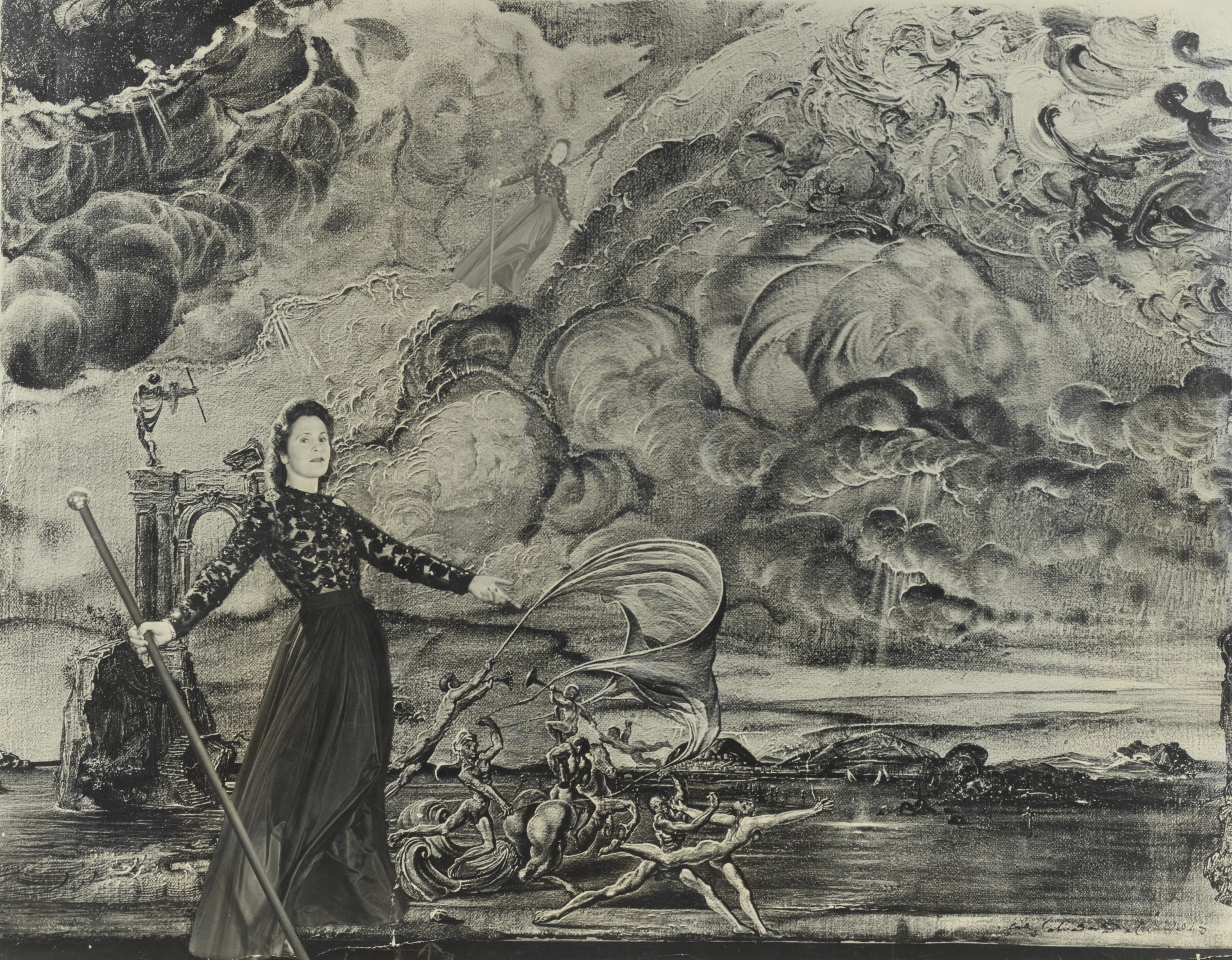
In June, Vogue devotes almost a whole two-page spread to ‘Madame Salvador Dalí’. For the occasion, Dalí conceives a collage in which two images of Gala, photographed by Horst, are inserted on the painting The Triumph of Tourbillon (Cat. No. 572).
That same year, Horst takes the memorable portrait of Salvador Dalí with his eyes closed. With this gaze directed inward, artist and photographer evoke the world of dreams and the subconscious, the central axis of Surrealist thought.
1945
February sees the publication of the book Horst: Photographs of a Decade, edited by Georges Davis. The chapter dedicated to Paris features the designs for Bacchanale, from 1939, and the portrait of Salvador Dalí with his eyes closed, from 1943.
1947
Horst moves to his new home in Oyster Bay (Long Island, New York), where the designer Christian Dior, Baron Nicolas ‘Niki’ de Gunzburg and Salvador Dalí are among his first guests.
1948
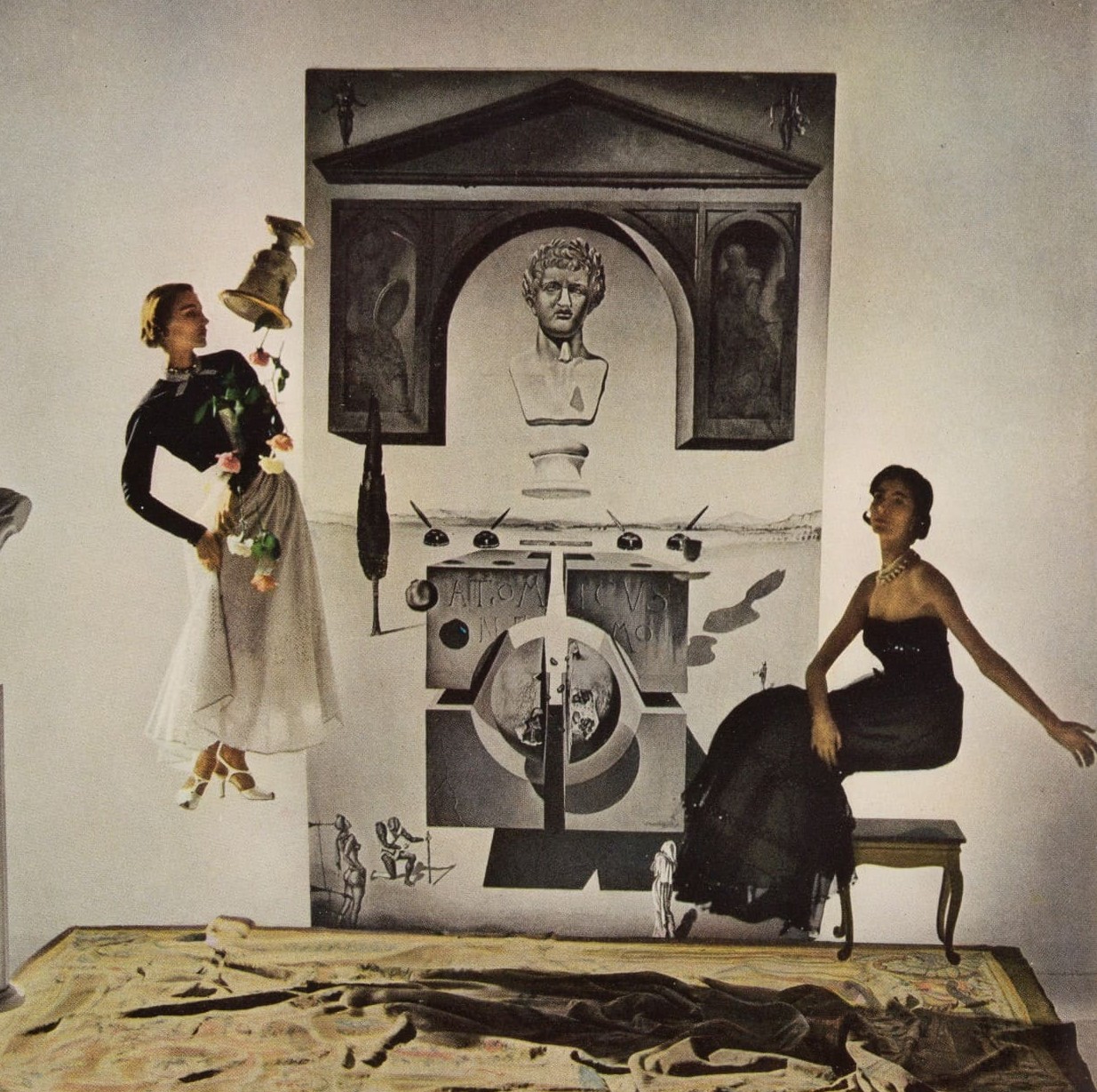
In May, Vogue illustrates the ‘Points…’ section with an image conceived by Salvador Dalí and accompanied by a short text, ‘Dali Composes a Photograph’. In the picture, taken by Horst, the artist establishes a direct dialogue with the latest works that he has just presented at the Bignou Gallery in New York. In line with the concept of ‘nothing is ever touched’ of quantum physics – which marks paintings such as Dematerialization near the Nose of Nero (Cat. No. 626), reproduced in the image – Dalí and Horst present two models suspended in the air, wearing summer designs specially commissioned from Hattie Carnegie for the occasion.
1950
Horst photographs Gala and Salvador Dalí in a rocky landscape, near the sea, probably somewhere on the east coast of the United States. This photo-essay is a rarity in the work of a photographer who usually prefers to shoot indoors.
1953
In May, Vogue publishes a fashion shoot by Horst with sets by Marcel Vertès. In one of the images, in a knowing wink to Salvador Dalí, Horst includes a more relaxed version of the costumes the artist had designed with Coco Chanel for the ballet Bacchanale more than ten years before. The model, Kathy Dennis, wears a dress by designer Mollie Parnis, who coincidentally had acquired Dalí’s Horse and Rider (1935) in 1951.
1957
In or around this year, Horst held a photo session with Gala and Salvador Dalí in his studio. A portrait of Dalí, the result of this shoot, appears on the jacket of the book Dalí on Modern Art − The cuckolds of antiquated modern art, written by the artist and published by Dial Press.
1960
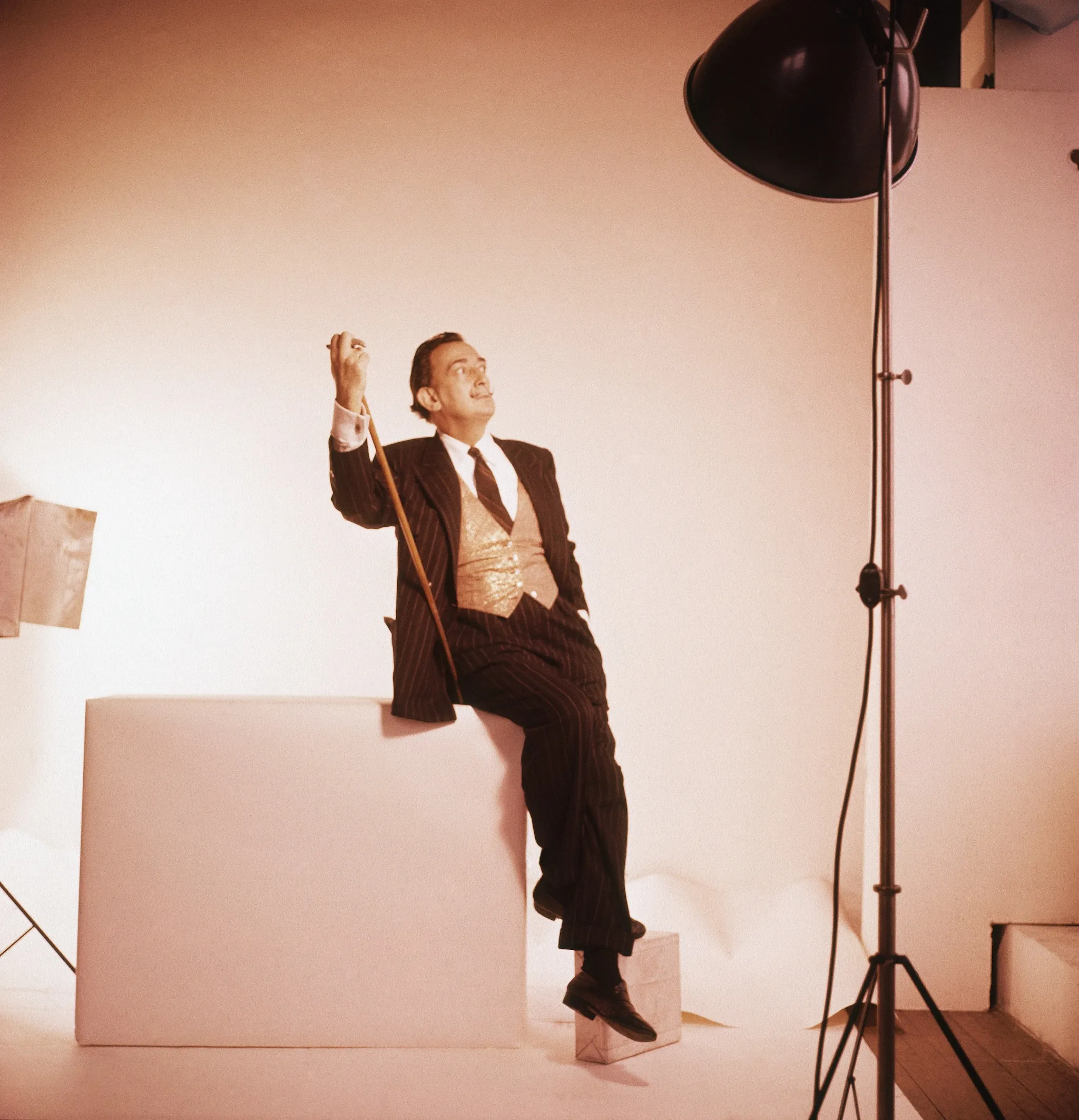
In or around this year, Horst photographed Dalí in his studio, with the artist seated in front of a spotlight. Dalí is elegantly dressed and holds a cane with a haughty air. This is the last known portrait of Salvador Dalí by Horst P. Horst.
1964
Horst does a photo shoot with the model and budding actor William Rothlein, who was mooted to star in a film about Salvador Dalí to be directed by Federico Fellini. Although the project never saw the light of day, it was surely the reason for this commission, the contact sheets of which include several portraits of the model, naked, clearly inspired by the classical ideal of male beauty.
1966
In June, Vogue publishes ‘The House that Horst Grew’, an extensively illustrated report written by Valentine Lawford, a British diplomat and Horst’s partner at the time. In a shot of the bedroom, a detail of a watercolour by Salvador Dalí can be seen on the bed.
1971
In the foreword to his book Salute to the Thirties, published by the New York imprint Viking Press, Horst recounts an amusing anecdote about Coco Chanel and Salvador Dalí: ‘Without a doubt, the center of the circle, the star of the circus, was Chanel. She was omnipresent and omnipotent. She argued and pontificated; she set up an alarm clock on her table when Dalí was present, and insisted that after he had spoken for ten minutes without interruption, she had the right to do the same.’
1981
In a television interview with Horst P. Horst for the ABC series Visions and Images – American Photographers on Photography, presented by Barbarelee Diamonstein-Spielvogel, the photographer speaks about the avant-garde Paris of his youth and the influence it had on his work. Horst explains that, during the thirties, there was little or no diemarcation between fashion designers, artists, intellectuals and fashion editors, and cites as an example the case of Salvador Dalí, who at that time designed several haute couture dresses with Elsa Schiaparelli.