Creative dialogue
“Elegance is the balance between fantasy and the eye.”
SALVADOR DALÍ
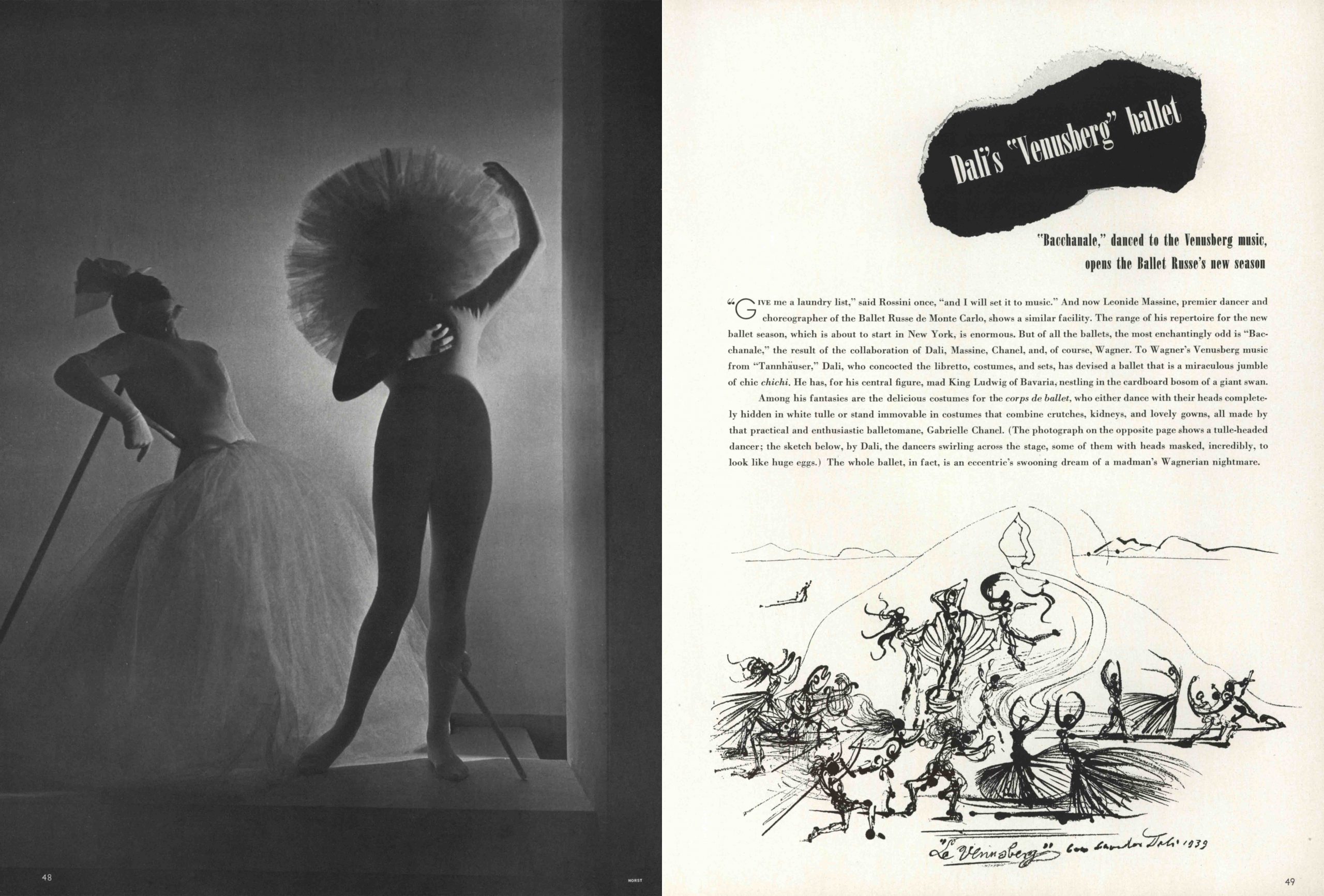
From the beginning of their collaboration, in the late thirties, the artist and the photographer transformed the act of looking into a creative, deliberate and poetic action, in which the fascination with the classical world is often present as a backdrop.
Salvador Dalí, bold and transgressive, explored the limits of beauty in the proposals for the ballet Bacchanale, the Dream of Venus pavilion and the sets for Vogue, which have Botticelli’s Venus and the architectural recreations of antiquity as the basis of his experimentation.
Horst P. Horst, for his part, provided the perfect counterpoint to Dalí’s ideas by endowing his compositions with a harmonious and idealised beauty, to give the images a patina of eternity redolent of the classical art that he so admired and which, at the same time, gave him so much inspiration.
DREAM OF VENUS
The first creative exchange between Salvador Dalí and Horst P. Horst took place in 1939, within the framework of the creation of the Dream of Venus pavilion for the New York World’s Fair. Testimony to this inaugural meeting in North America survives in Horst’s iconic photographs of the nude models whom Dalí and Gala had first adorned with elements evoking the marine imagination, such as the legendary Galalith star necklace from Elsa Schiaparelli’s 1939 summer collection.
With Dalí’s intervention, these images are transformed into costume designs for the mermaids destined to form part of the installation. The strength of these abyssal beings, both enchanting and disturbing, evokes that convulsive, unpredictable and irrational beauty announced by André Breton in Nadja (1928) and also resonates with special intensity in some of Daniel Roseberry’s most recent creative proposals for Maison Schiaparelli.
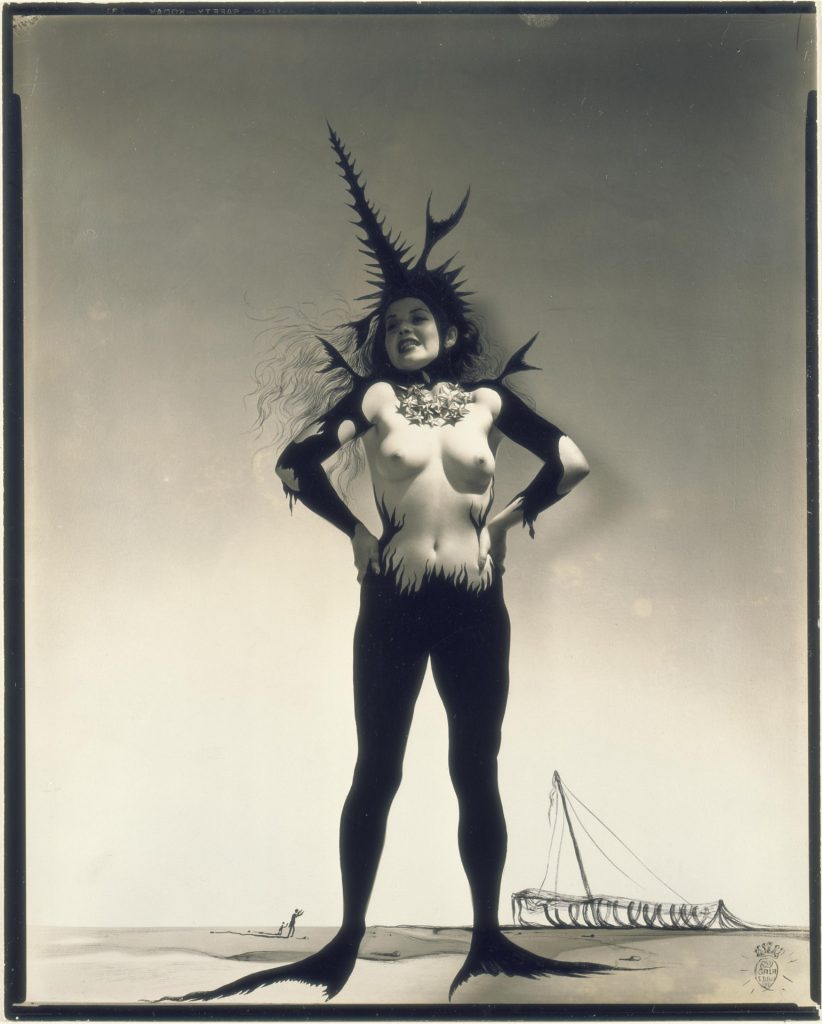
Costume design for Dream of Venus
1939
Exhibition copy
Baltimore Museum of Art, BMA 1988.286
Baltimore Museum of Art, Purchase with exchange funds from the Edward Joseph Gallagher III Memorial Collection; and partial gift of George H. Dalsheimer, Baltimore, BMA 1988.286
Photography By: Mitro Hood
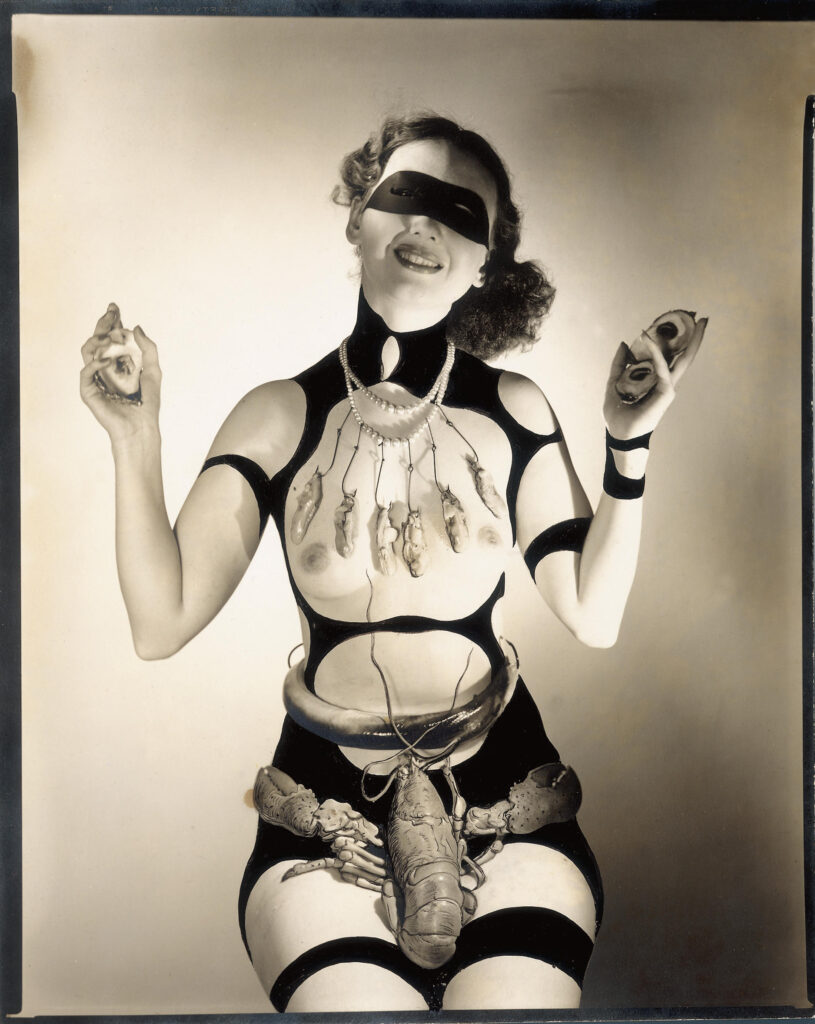
Salvador Dalí / Horst P. Horst
Costume design for Dream of Venus
1939
Exhibition copy
The Israel Museum, Jerusalem, B81.1348
FASHION AND SURREALISM
During the thirties, Surrealism crossed the boundaries of art and projected itself towards fashion and commerce, creating the perfect setting for Salvador Dalí to bring his ideas and proposals to the general public. The artist’s forays into prestigious magazines such as Vogue are particularly noteworthy, as are his collaborations with the Italian couturier Elsa Schiaparelli on various haute couture designs and the surrealist window displays conceived for the New York department store Bonwit Teller.
In this same context, the photographic language, which has eclipsed graphic illustration in fashion magazines, is also experiencing a moment of great projection and finds in avant-garde art a creative engine. In the words of Horst P. Host, ‘the décor set up by the photographer, the dress, even the model, reflected whatever «isms» were stirring the Paris of that particular season’. In fact, Horst’s collaborations with Dalí for Vogue, as well as the numerous photographs taken during the thirties and forties, allow us to grasp how the influence of surrealism also permeated Horst’s work, endowing it with a disturbing and profoundly poetic dimension.
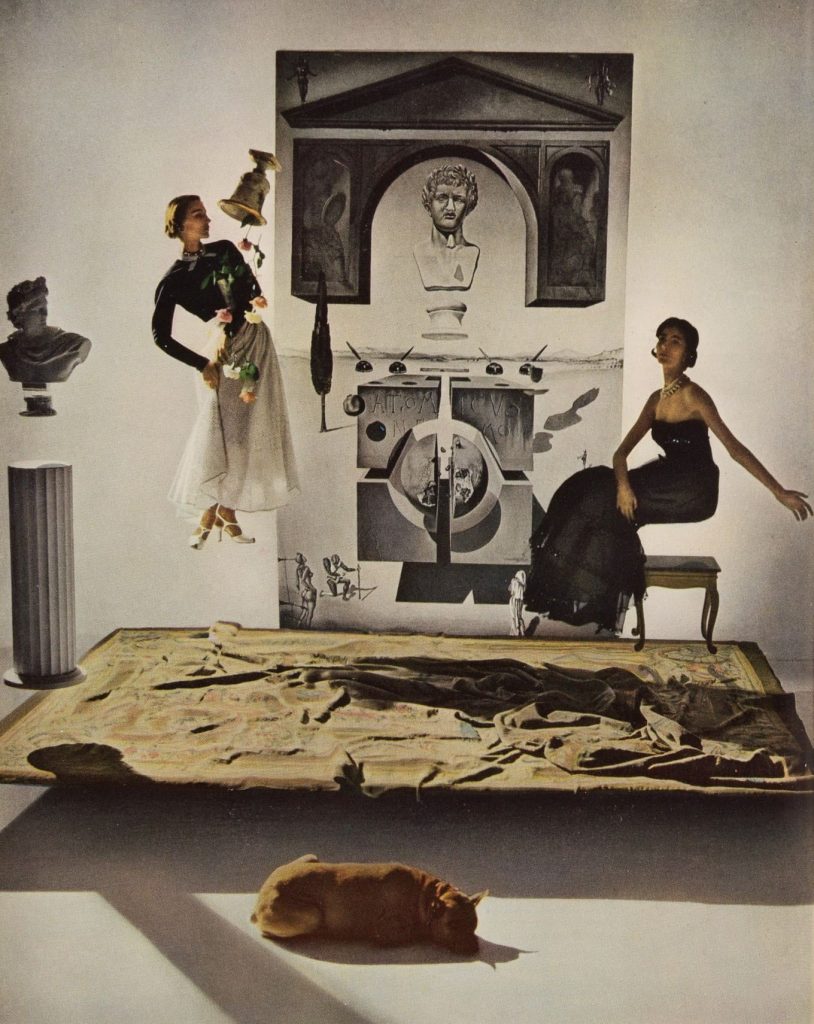
Composition by Salvador Dalí per a Vogue
1948
Condé Nast Archive
New York